
Dignity-Centered Inclusive Education in Rural Pakistan
The AES Dignity-Centered Inclusive Education Model — how Al-Ijaz Education System, Kallar Kahar, supports over 500 students, including 251 orphans, without ever defining a child by the support they receive.
A thriving institution, built on a different principle
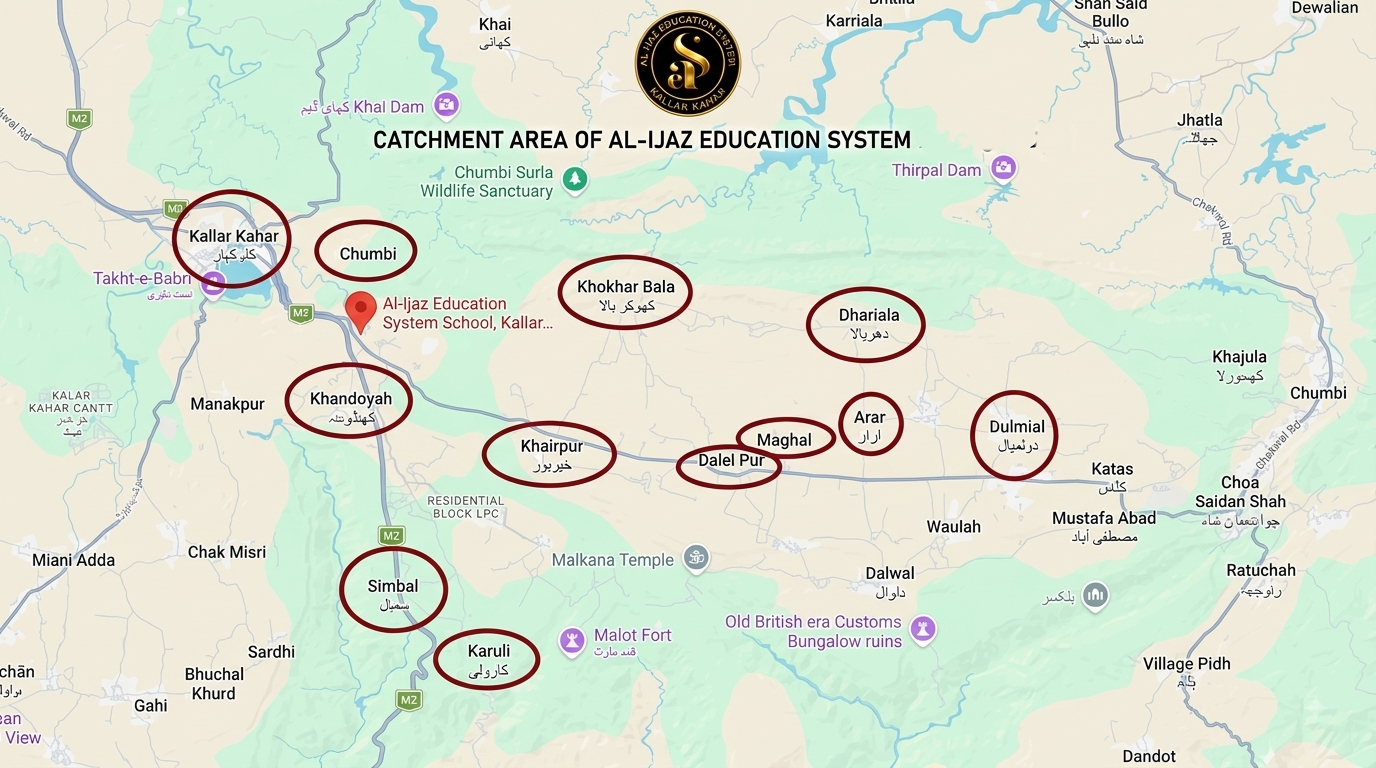
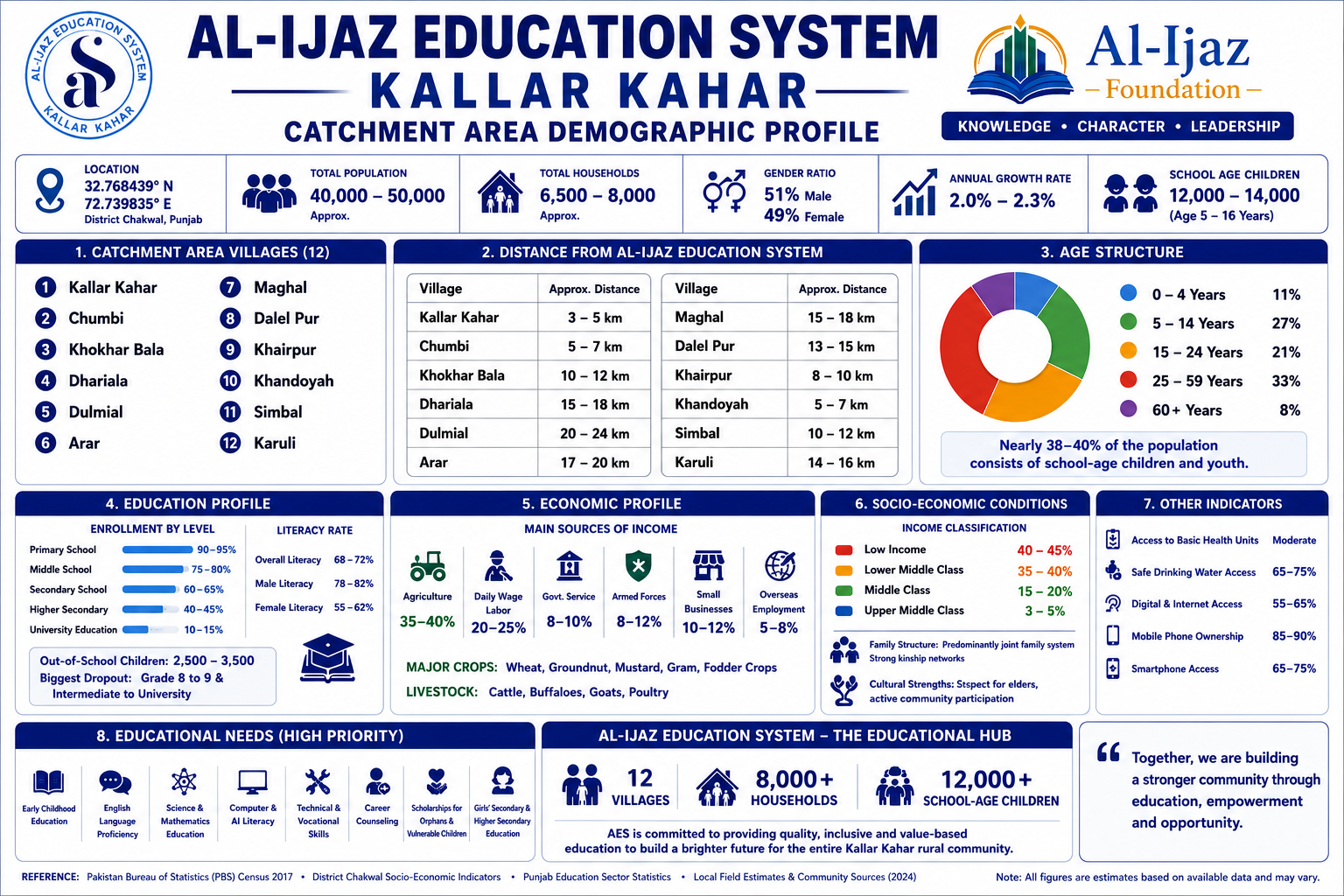
Al-Ijaz Education System (AES) operates in Kallar Kahar, District Chakwal, Punjab, under the management of Al-Ijaz Foundation — serving children from twelve surrounding villages in a predominantly rural setting.
| Total Students | 534 |
| Day Scholars | 477 |
| Hostelized Orphans | 57 |
| Total Orphan Students | 251 |
| Students on Full Support | 124 |
| Students on Partial Support | 127 |
| Teaching Staff | 28 |
| Support Staff | 22 |
- Section 42 Not-for-Profit Company
- Registered with SECP
- Certified by Punjab Charity Commission
- Schools approved by the School Education Department, Government of the Punjab, Lahore
Exclusion is not only economic — it is a challenge of dignity
"Educational support should empower children without defining them."
Across many charitable educational settings, students receiving support may be publicly identified, categorized, or separated from their peers. Such practices often emerge from legitimate fundraising needs — but they can unintentionally reinforce social distinctions and affect a child's self-esteem. This principle became the foundation of the AES model.
Grounded in established human development perspectives
Human Dignity & Self-Esteem
Belonging, esteem, and self-respect are essential human needs. A dignity-preserving environment creates the conditions for confidence, aspiration, and achievement.
Self-Efficacy
Students who believe in their abilities are more likely to succeed academically and socially. AES cultivates this through equal participation and equal expectations.
Capability Approach
Education is treated as a means of expanding freedoms and opportunities, not merely a service delivered to those defined by need.
Inclusive Education
UNESCO's framework for participation, equity, and belonging is extended at AES to integrate dignity protection directly into inclusive practice.
Six interconnected pillars
Dignity Before Charity
Support is provided discreetly and respectfully. Students are recognized for their talents, character, and achievements rather than their economic circumstances.
Inclusion Without Segregation
All students learn, participate, compete, and lead together. No distinction is made between supported and fee-paying students in educational life.
Equal Expectations
Every student is held to the same academic and behavioral standards. Support does not imply lower expectations.
STEM Empowerment
Technology and innovation are integrated into learning through partnerships with IEEE Islamabad Section and SEECS-NUST — robotics, engineering design, coding, and problem-solving.
Character & Leadership
Leadership is built through four student houses, mentorship programs, community engagement, and co-curricular activities.
Community Transformation
Students actively participate in environmental, health, sanitation, and community service initiatives.
Dignity as the foundation for everything that follows
Academic outcomes, examined honestly
The dip in the 2025 pass rate reflects the challenges of a larger, more varied student cohort — not a reduction in institutional commitment to academic excellence.
2023 cohort: all 23 students who appeared achieved Grade A.
Advanced STEM education, in a resource-constrained setting
Through partnerships with IEEE Islamabad Section and SEECS-NUST, approximately 300 students have gained hands-on exposure to robotics, engineering design, coding, and problem-solving.
- STEM Learning Kits
- DIY Engineering Kits
- Smart Robotic Car Programming Kits
- Coding Exposure
- Innovation-Based Learning Activities
Community-supported, not donor-dependent
Unlike many nonprofit educational institutions that rely heavily on international donor support, AES sustains its operations through community-driven philanthropy and local resource mobilization.
What teachers, students, and parents observe
Teachers
Consistently report increased confidence, social integration, leadership development, STEM engagement, and digital literacy among students.
Students
Highlight feelings of belonging, educational opportunity, confidence, aspiration, and personal growth.
Parents
Emphasize academic improvement, leadership development, character formation, equal opportunities for girls, and support for vulnerable children.
Contributing directly to global development goals
- Vulnerable children can be supported without being stigmatized.
- Inclusion can coexist with academic excellence.
- Rural schools can deliver meaningful STEM education.
- Philanthropy can preserve dignity while expanding opportunity.
- Strong institutional leadership
- Commitment to dignity-centered practices
- Community engagement
- Teacher development
- Inclusive school policies
- Strategic partnerships for STEM education
Building on what's been proven
AES Center for Dignity-Centered Inclusive Education
A research and training center documenting best practices and supporting educational innovation.
Rural STEM Innovation Hub
Expansion of robotics, coding, AI, engineering design, and technology-enabled learning.
International Research Partnerships
Collaboration with universities, researchers, and educational institutions.
Global Student Exchange Programs
Virtual and in-person exchanges connecting rural Pakistani students with international peers.
Comparative Educational Research
Research exploring the relationship between dignity-centered inclusion, educational achievement, and social mobility.
Serving more than 500 students, including a substantial population of orphan and vulnerable children, AES demonstrates that educational support need not compromise self-respect, social inclusion, or aspiration.
Every child deserves support. No child should be defined by the support they receive.— Dr. Shoaib Ahmed, Executive Director, Al-Ijaz Education System Partner With Us